
The Church teaches that the Eucharist is the source and summit of the Christian life. I have also often written and preached that the principal ministry of a priest is the celebration of the sacraments, and in a particular way the Holy Sacrifice of the Mass. With that in mind, some of you may be wondering: Why, then, have I canceled Masses?
Before explaining the reasons, I want to make sure everyone is aware of the changes to our Mass schedule. We have discontinued the noon Mass on Mondays and Saturdays, as well as Friday evening confessions and the 5:30 p.m. Mass. I also informed parishioners this Sunday that the final 8:30 a.m. Sunday Mass at St. Joseph will be celebrated on November 22, the Solemnity of Our Lord Jesus Christ, King of the Universe.
In short, these decisions are an attempt to follow both universal Church law and the policies of our diocese while making responsible use of the priests available to us.
Canon 905 of the Code of Canon Law establishes the general rule that a priest is not to celebrate Mass more than once a day. When there is a shortage of priests, however, the local ordinary may permit a priest, for a just cause, to celebrate twice in one day and, when pastoral necessity requires it, even three times on Sundays and holy days of obligation.
Our diocesan policies are intended to apply those provisions responsibly to parish life. Ordinarily, parishes may schedule one Mass on weekdays, Monday through Saturday, for each priest assigned to the parish, while also respecting each priest’s day off, and up to two Sunday Masses per priest. Permission may be given for additional Masses when genuine pastoral necessity requires them.
Bishop Keehner has generously given priests the faculty to celebrate two Masses on weekdays when necessary. But those additional Masses are not intended simply to allow every available slot to be filled with regularly scheduled parish Masses. Priests also need to be available to celebrate funerals, school Masses, nursing home Masses, weddings, and other Masses that arise from the pastoral needs of the people entrusted to their care.
In our case, for example, we provide for the liturgical needs of two schools: Bishop Heelan Catholic High School and Cathedral Dual Language Academy. Each school normally has a Mass every week. We also need to leave room in the schedule for funerals and other pastoral needs that cannot always be predicted in advance.
For example, Fr. Galles’ day off is Monday and mine is Friday. If we simply decided that on those days the other priest would always celebrate both of the previously regularly scheduled parish Masses, we would effectively make every Monday and Friday unavailable for funerals or other Masses that might need to be celebrated. With limited resources, saying yes to one thing often means having to say no to something else.
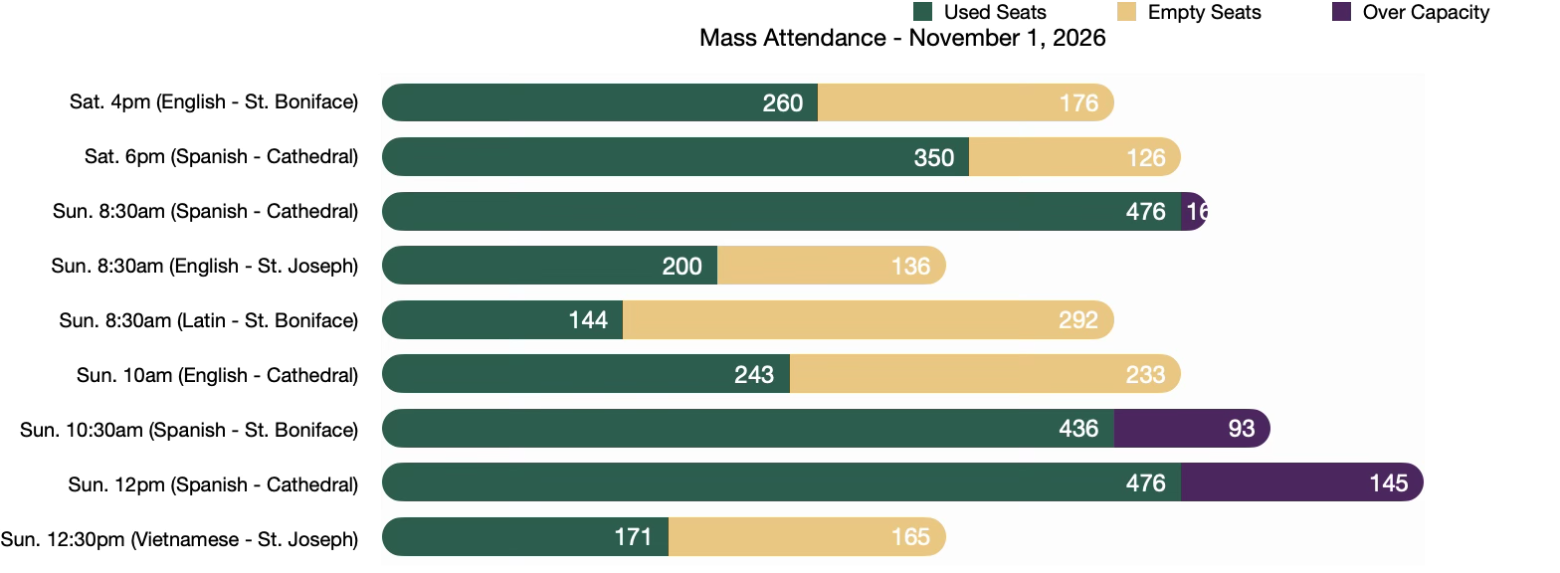
The same reality applies on Sundays. The bishop considers parish attendance and other pastoral circumstances when deciding whether there is sufficient need for a priest to celebrate a third Mass. In our case, we will need to request permission for one of us to celebrate a third Sunday Mass because we absolutely need our four Spanish-language Masses. Combined, those Masses are already operating above 100 percent of available seating capacity. By contrast, we need only two English-language Masses, where there is still room available.
Is this ideal? No. But the fact that we were able to maintain a particular schedule when three priests were assigned here does not mean that the same schedule can reasonably be maintained with only two.
The question of how many Masses a priest should celebrate in one day is certainly not new. In the thirteenth century, St. Thomas Aquinas addressed it in the Summa Theologiae. Citing earlier Church legislation, he wrote that ordinarily one Mass a day was sufficient for a priest, noting that Christ offered Himself once for the redemption of the world. He also repeated a strong warning against priests multiplying Masses for financial gain or simply to win the approval of others.
There is also a very practical consideration that can easily be overlooked. When Mass is celebrated carefully, prayerfully, and worthily, it is demanding. Preparing for Mass, often hearing confessions beforehand, preaching, presiding, praying attentively, and then doing the same thing again at another Mass takes both physical and mental energy. When priests regularly celebrate more than two Sunday Masses, it takes a toll.
We want our Masses to be celebrated well. We should also want our priests to remain healthy and able to serve the Church for many years. Reducing the number of Masses does not mean that we value the Eucharist less. On the contrary, part of valuing the Eucharist is ensuring that the Masses we do celebrate are celebrated with the care and reverence they deserve, while also making it possible for priests to fulfill the other sacramental and pastoral responsibilities entrusted to them.
As we continue National Vocation Awareness Week, please continue to pray for vocations to the priesthood. Pray that young men from our own parish will generously answer the Lord’s call. And please also pray for those of us who have already been ordained, that we may serve you faithfully, generously, and for many years to come.

Do you need to meet with me? Click here
Would you like me to call you back? Click here
Do you need to send me an email? Click here
Would you like me to come bless your house? Click here
Would you like to have me over for dinner? Click here
Do you want to meet with Fr. Galles? Click here

Join me on a pilgrimage through Partugal, Spain, and France. Click here
Parish Announcements
***Permanent Mass Schedule Change*** As it was announced earlier this week, Fr. Jeremy Wind has been placed on an indefinite medical leave of absence, leaving only two priests to staff the Cathedral Parish. It was therefore necessary to adjust our weekday Mass schedule to conform to Church law. The Monday and Saturday 12:00 pm English Masses are now canceled, as is the Friday 4:30 pm Confessions and 5:30 pm Spanish Mass. The existing intentions for these Masses will be rescheduled to the calendar in the new year.
Due to a Deanery Gathering for all clergy on Wednesday, October 28, there will be no 4:30 pm confessions or 5:30 pm Mass.
Please Join us for the Red Mass for Lawmakers and Legal Professionals on Thursday, November 5 at 5:30 pm with Bishop Keehner. This is a special Mass to pray for judges, lawyers, lawmakers, and all who work in legal and governmental professions. A reception will follow in the Cathedral Hall.
Due to preparations for the Red Mass, there will be no 4:30 pm confessions on Thursday, November 5.
Due to a Priest Wellness Event in Storm Lake on Tuesday, November 10, there will be no 4:30 pm confessions or 5:30 pm Mass.
Due to the federal holiday of Veterans Day on Wednesday, November 11, there will be no confessions and only one 8:30 am Mass in Spanish for the Cathedral Dual Language Academy.
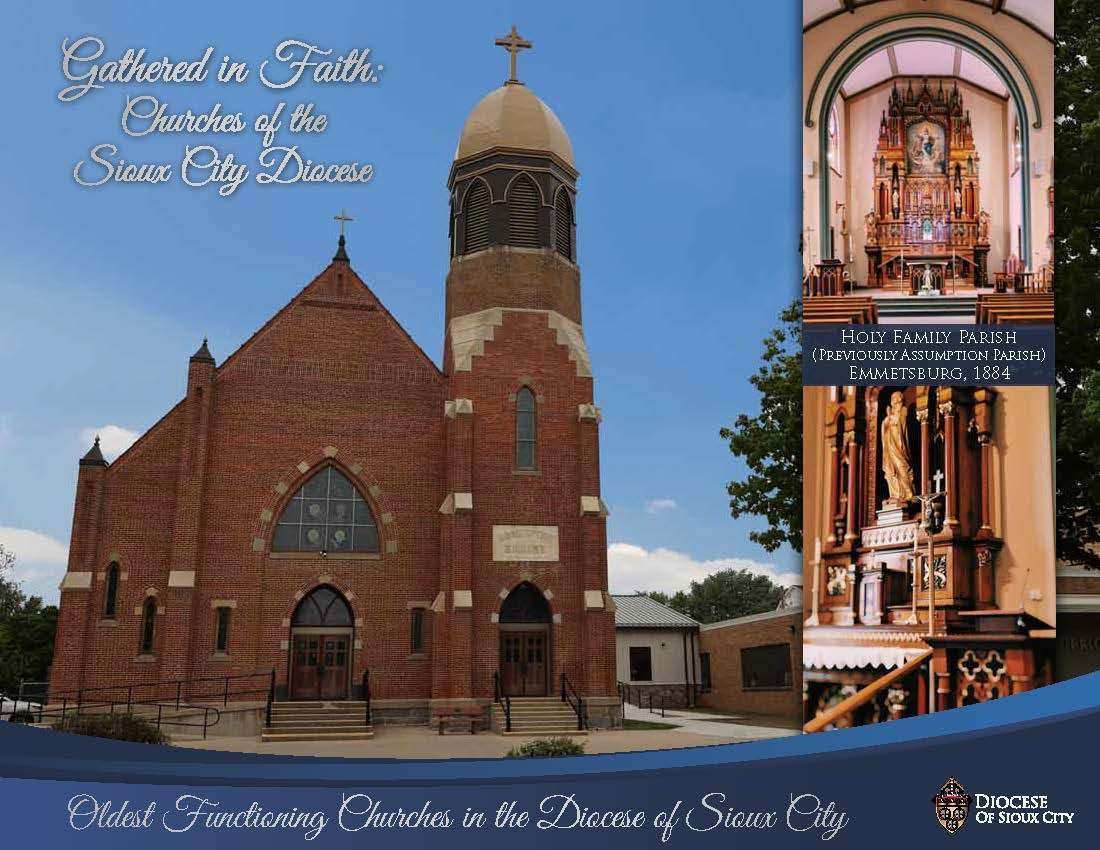
The Diocesan Office of Stewardship and Development is offering 2027 calendars, featuring our oldest historic functioning churches, including the 3 churches in our parish. Calendars are $25 and can be shipped to you - purchase at this link https://secure.qgiv.com/for/calendars/, or you can stop by our parish office and buy them for $20.
The Cathedral Music Series will be hosting a choral concert presented by Salus Choir under the direction of Rachael Wragge on Sunday, November 15 at 5:00 pm, following Sung Vespers. This concert is entitled Missa Collectio and will feature choral Mass parts from multiple composers.
Due to a Deanery Gathering for all clergy on Tuesday, November 24, there will be no 4:30 pm confessions or 5:30 pm Mass.
Due to the Thanksgiving holiday, there will be no confessions on Thursday, November 26 and Mass for Thanksgiving will be celebrated with music at 8:30 am. On Friday, November 27, there will be no confessions and only one English Mass at 8:30 am.
Parish Giving
Masses this Week
Monday, November 2
8:30 am - Cathedral (Spanish) † Faithful Departed
Tuesday, November 3
5:30 pm - Cathedral (Spanish)
† Souls in purgatory 12:00 pm - Cathedral (English)
† Poor souls in Purgatory
5:30 pm - Cathedral (English)
† Juan Zermeño Luna
Thursday, November 5
12:00 pm - Cathedral (English) † Joan Bauer
5:30 pm - Cathedral (English)
All Legal Professionals
Friday, November 6
Saturday, November 7
6:00 pm - Cathedral (Spanish)
† Gerardo Mendoza Coria
Sunday, November 8
8:30 am - Cathedral (Spanish)
Pro Populo 8:30 am - St. Boniface (Latin)
† LaVonne Friedrichsen 8:30 am - St. Joseph (English)
† Duane Sturges
12:30 pm - St. Joseph (Vietnamese)
Fr. Nguyen's Intention Liturgical Ministries
Saturday, November 7, 4 pm at St. Boniface
Lector
Lector
Michelle Rethman
Servers
Fatima, Juanita & Mercedes Orozco Servers
EMHC
Coleen Rose
Cantor
Dawn Prosser
Sunday, November 8, 8:30 am at St. Boniface
Servers
Peter DeWittCole Hughes
Peter & Patrick Kanaly
Paxton Bouma
Cantor
Erin Nelson
Sunday, November 8, 8:30 am at St. Joseph
Lector
Mary Bertram
Servers
Jameson Plautz
Megan Trierweiler
Cantor
Dawn Prosser
Lector
Mary Bertram
Servers
Jameson Plautz
Megan Trierweiler
Cantor
Dawn Prosser
Mass Counts
A Family of Faith

Religious Education: A Family of Faith
Upcoming High School Youth Group Meeting
The Cathedral Youth Group invites all students in grades 9 through 12 to join the Dead Theologians Society (DTS). Our next meeting will be on Sunday, November 8, from 4:00 p.m. to 6:00 pm. We will begin at the Cathedral for Vespers at 4:00 pm. and then head over to the parish hall. We hope to see many of you there; we have games, a 20-minute talk, and a meal planned. Invite your friends or cousins!
- please remember that there is homework to be done at home with your children; make sure to review the prayers with them daily.
- Parents, please remind your children to bring the small booklet to Mass each weekend so it can be stamped at the end of the service. Please always wait for the priest to return to the sacristy and never interrupt the final procession; the catechist or the person stamping the booklets will be waiting for you at the back of the church.
- The next class for both programs will be on Wednesday, November 4, at 6:00 pm.
- Parents, please ensure your children arrive at class on time; many students are arriving late. If they are late, they risk finding the door locked and being unable to enter the building for class. The neighborhood is dangerous, and it is not safe for them to be left outside alone.
- Parents, please refer to the Religious Education program schedule—which was distributed to all students last Wednesday. You might want to place it somewhere visible to keep track of upcoming classes; if you happen to lose it, you can stop by the office to pick up a copy.
Upcoming High School Youth Group Meeting
The Cathedral Youth Group invites all students in grades 9 through 12 to join the Dead Theologians Society (DTS). Our next meeting will be on Sunday, November 8, from 4:00 p.m. to 6:00 pm. We will begin at the Cathedral for Vespers at 4:00 pm. and then head over to the parish hall. We hope to see many of you there; we have games, a 20-minute talk, and a meal planned. Invite your friends or cousins!
- We are asking the community for help in providing or preparing dinner, desserts, or beverages for each meeting.
- We are also looking for adults (18 and older) who would like to get involved and join the team.
Cathedral Dual Language Academy
Knights of Columbus

Contact - Check out our Facebook page for activities and updates “Knights of Columbus Council 743 USA”.
Email: KofC743USA@gmail.com.
Phone:
English -
Brent- 712-490-0410
Spanish -
Jorge 308-383-2517
Knights in Action:
- Next meal: Saturday, December 5 and Sunday, December 6th.
- Next Meeting: November 17, starting with the Holy Rosary at 7pm.
Knights and Action: The Knights will be distributing a limited number of children's coats on Sunday, November 8, following the 8:30 a.m. Mass in the Cathedral Hall. If your child is in need of a coat, please stop by. Coats will be available while supplies last.
Community Announcements
The Diocese of Sioux City and St. Mary’s in Humboldt are hosting a Cycle Prep workshop for girls 9-11 and their mothers. Cycle Prep is a body-positive workshop rooted in the Catholic faith, designed to help girls aged 9–11 understand and respect their changing bodies. This workshop is scheduled for Sunday, November 15 from 1 to 3:30 p.m. in the Parish Hall. Find out more and register at scdiocese.org/cycleprep.
Lumen Media Vocations content
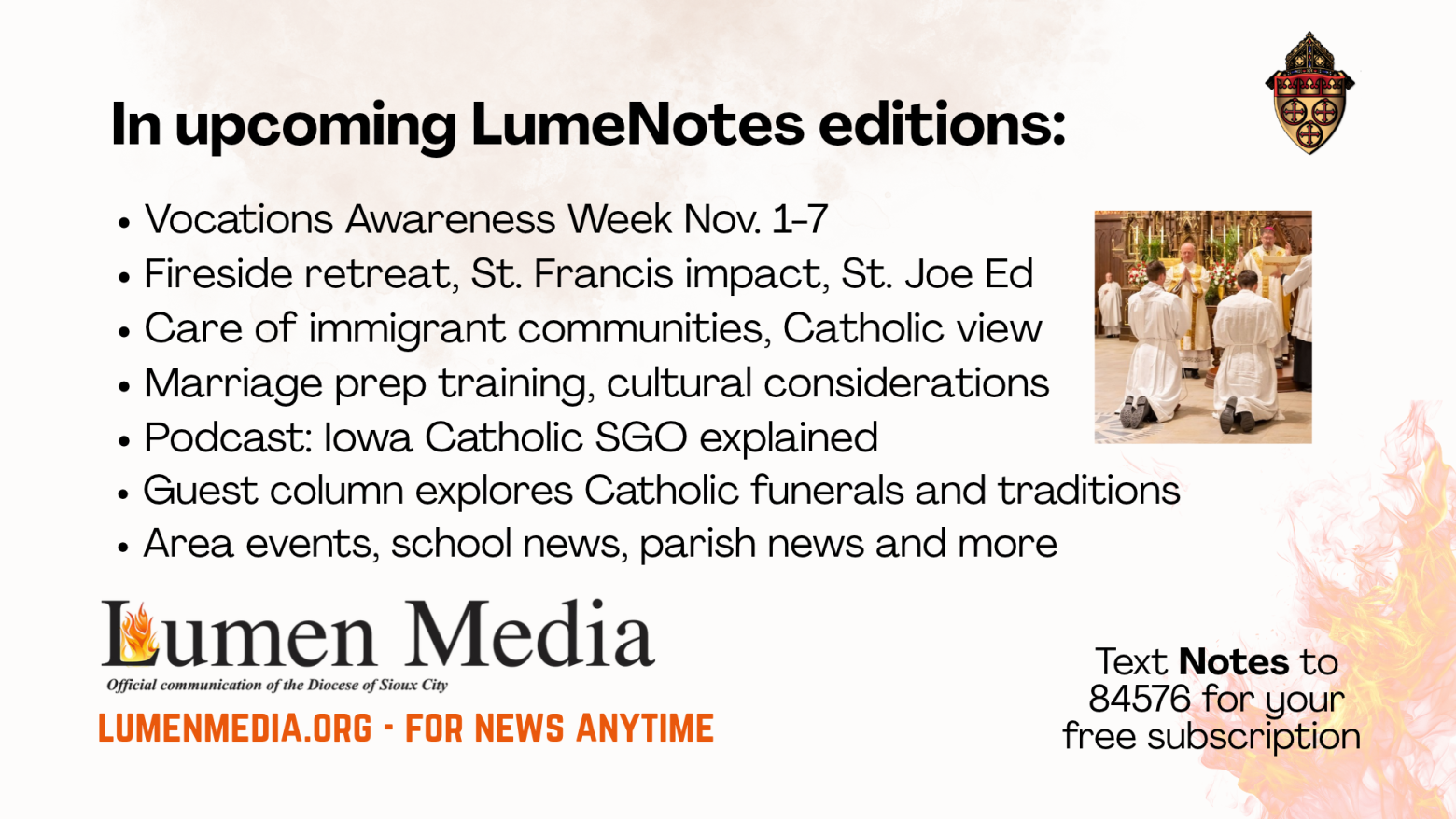
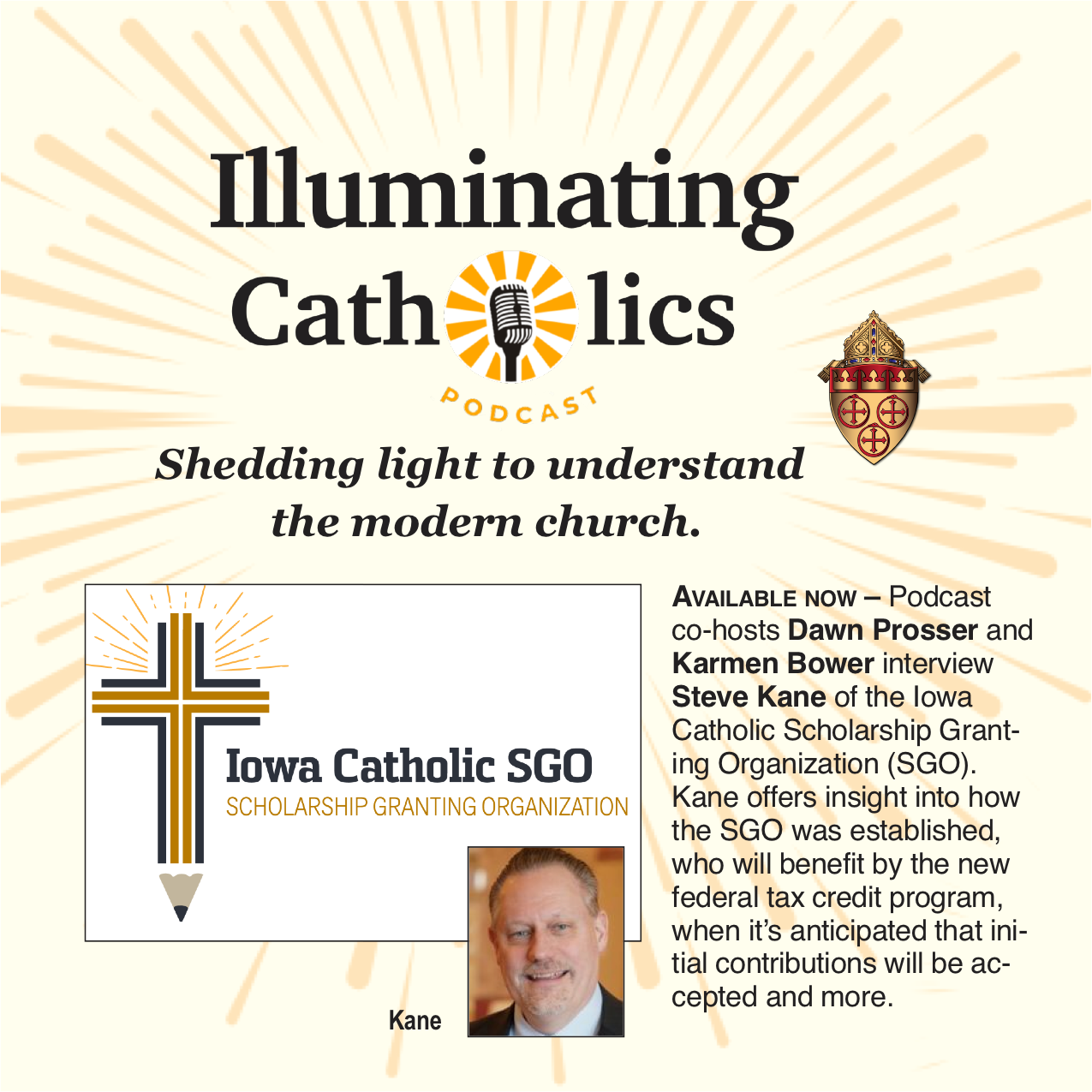
This week is National Vocations Awareness Week and we will have content on fostering a culture that promotes vocations to the priesthood and religious life. Learn about a new initiative to pray for vocations, upcoming Fireside retreat for young men, St. Joseph Education Fund Collection impact upon vocations, influence of St. Francis in this jubilee year. Also, care of immigrant communities from a Catholic perspective, marriage prep training and cultural considerations and podcast on the Iowa Catholic SGO. Subscribe for FREE at news@scdiocese.org or text Notes to 84576. (For Spanish content – text Notas to 84576.) Try convenient text delivery!
This week is National Vocations Awareness Week and we will have content on fostering a culture that promotes vocations to the priesthood and religious life. Learn about a new initiative to pray for vocations, upcoming Fireside retreat for young men, St. Joseph Education Fund Collection impact upon vocations, influence of St. Francis in this jubilee year. Also, care of immigrant communities from a Catholic perspective, marriage prep training and cultural considerations and podcast on the Iowa Catholic SGO. Subscribe for FREE at news@scdiocese.org or text Notes to 84576. (For Spanish content – text Notas to 84576.) Try convenient text delivery!
Diocese celebrates 125th anniversary
The Diocese of Sioux City will be celebrating the quasquicentennial in 2027 – 125 years since the establishment of the diocese. The commemoration will be marked with several events starting January 2027 at diocesan sites and historical news content throughout the year from Lumen Media, as well as other activities yet to be finalized. The anniversary kicks off Jan. 15 – the actual anniversary date when Pope Leo XIII erected the diocese. For a list of key events, scan the QR code or go to www.scdiocese.org/125th.
The Diocese of Sioux City will be celebrating the quasquicentennial in 2027 – 125 years since the establishment of the diocese. The commemoration will be marked with several events starting January 2027 at diocesan sites and historical news content throughout the year from Lumen Media, as well as other activities yet to be finalized. The anniversary kicks off Jan. 15 – the actual anniversary date when Pope Leo XIII erected the diocese. For a list of key events, scan the QR code or go to www.scdiocese.org/125th.

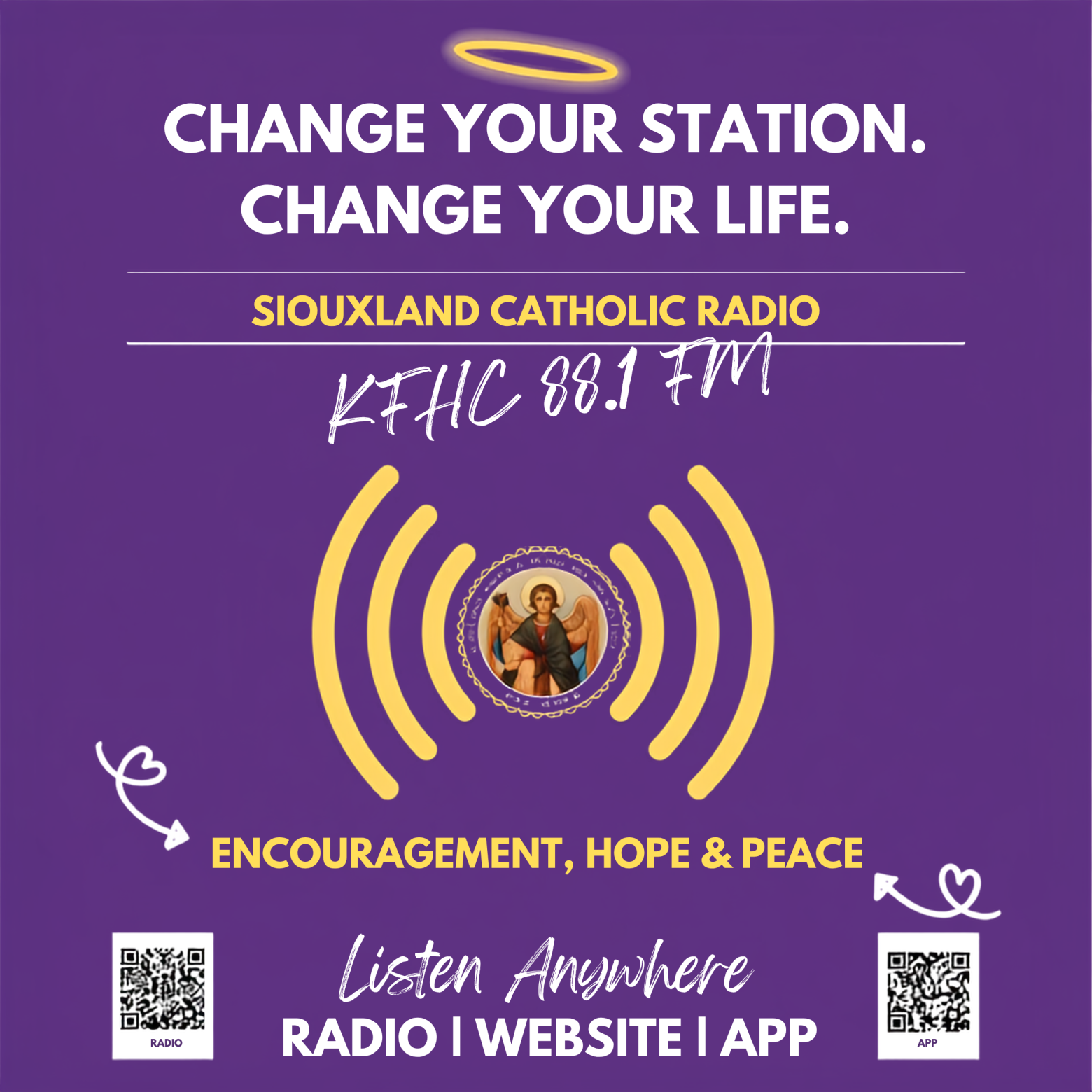
Local Shows on KFHC/KOIA
- Divine Mercy Chaplet – Daily at 3 pm
- Mater Dei Mass – Sundays at 9 am
- Life Plan – Sundays at 8 pm
- Faith in Action – Mondays at 9 am (Replay: Saturdays at 7 pm)
- Catholic Ministry Professionals – Tuesdays at 4 pm
- Draw Near – Wednesdays at 4 pm
- Father Knows Best – Wednesdays at 9 pm
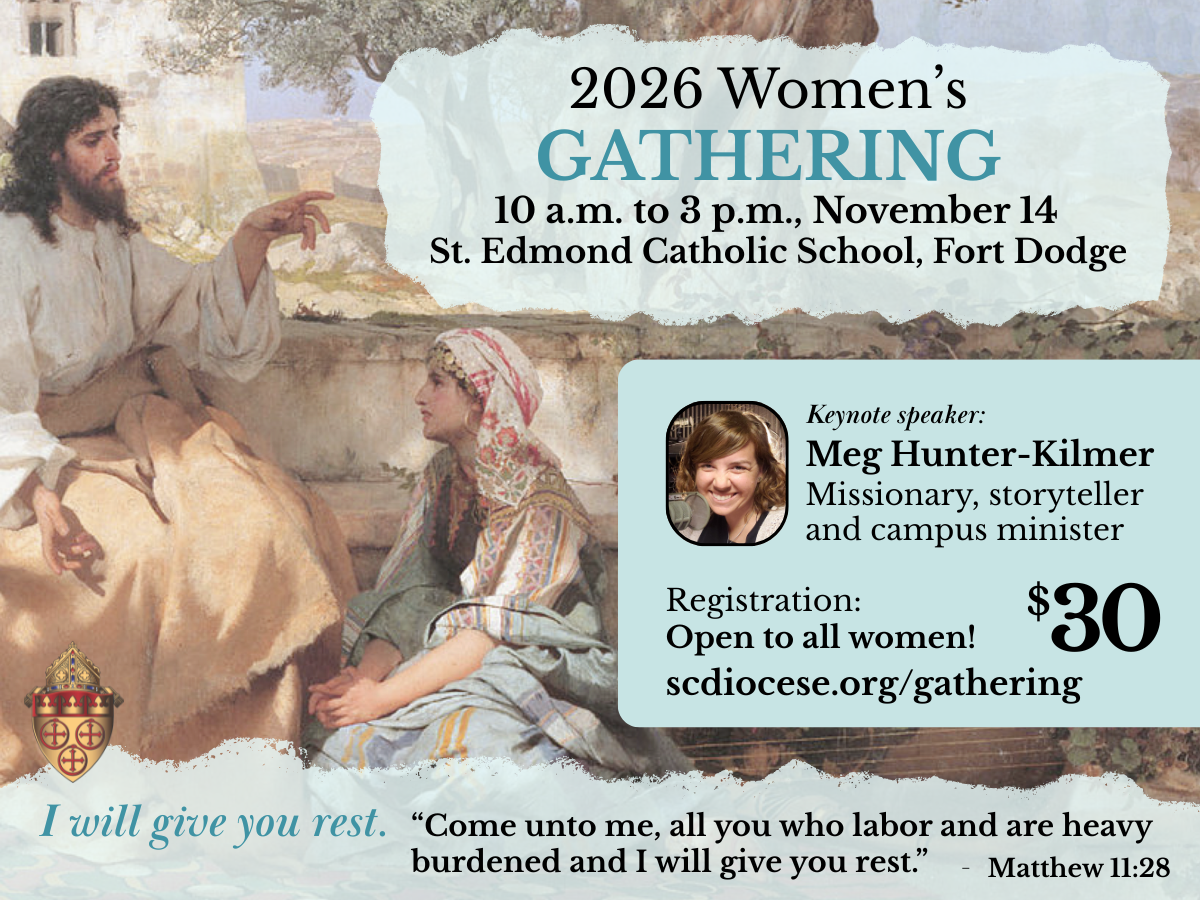
The 2026 Women’s Gathering, “I will give you rest” is scheduled for Saturday, Nov. 14 at St. Edmond Catholic School in Fort Dodge from 10 a.m. to 3 p.m. Meg Hunter Kilmer, campus minister at the University of Notre Dame and one of the presenters from the National Eucharistic Congress will serve as the keynote speaker. In addition to the keynotes, the day will include Adoration, confession, small groups, fellowship, vendors and more. If you have any questions, please contact Maddie McLarty at maddiem@scdiocese.org.
If you would like to submit announcements for Lines of Faith, please send them to Blanca at bcancino@sccathedral by 10am Friday.

Carmelite Nuns Celebration
All parishioners and friends are invited to attend a celebration commemorating the 60th anniversary of the Carmelite Guild Board of Directors and Carmelite Nuns of Sioux City. The event will take place on Tuesday, April 18 from 1:00pm to 3:00pm at Holy Cross St. Michael Parish Center, 2223 Indian Hills Drive. Doors open at 12:30pm.
The day includes a dessert bar, beverage, information on the Carmel Guild and peace cards, display of Carmel memorabilia, and a slide show. Cards may be played until 3:00pm. Raffle tickets can be purchased until 2:30pm at $1.00 each, and the winners will be announced at 3:00pm. There will be a free will donation. For more information please call 212-0248 or 635-4488.
Bible Study
We will have a new 5 week Bible Study during Easter entitled “The Power of the Resurrection” led by Fr. Jeremy Wind. We will meet Thursday’s at 6:45pm starting April 20-May 18th. Please contact the office for more information.

We need volunteers to help with the occasional funeral luncheons at St. Boniface, St. Joseph, and the Cathedral. Time commitment would be from approximately 9:30am-1:00pm. No cooking or prep work is involved; all the luncheons are catered. Responsibilities include setting up, greeting the caterer, possibly making lemonade or coffee, assisting the family, and light clean up afterwards. We are happy to provide families and friends a space to gather for sharing, which is an important part of the grieving process. Please call Julie at 712-255-1637x109 or email jkrogh@sccathedral.org Thank you!
Calvary Cemetery will have a Memorial Day Mass at 9:00 am Monday, May 29.


Calvary Cemetery
Help Wanted: Caretaker at Calvary Cemetery
Duties include groundskeeping, maintenance & customer service.
This is a full-time position with 401K, PTO, health & life insurance.
For more information, contact Bob at (712) 259-0603 or bobr@scdiocese.org.

The Cathedral Hall will be closed for the entire month of June as work will be undertaken to replace the flooring.
Deacon Jake Rosenmeyer extends his thanks and gratitude to the Cathedral parishioners for their prayerful support, especially those who attended his Ordination Mass this weekend. Please pray for Deacon Jake as he prepares to go to his summer assignment at John Paul II Parish in Carroll and as he prepares to finish his last year of seminary in St. Louis.
Sunday Vespers will not be celebrated during the summer months at the Cathedral due to low attendance. The last Vespers of this season will be on June 2, Corpus Christi Sunday. 4:00 pm Vespers will resume on Sunday, September 8.
Sunday Vespers will not be celebrated during the summer months at the Cathedral due to low attendance. The last Vespers of this season will be on June 2, Corpus Christi Sunday. 4:00 pm Vespers will resume on Sunday, September 8.
Please remember to either silence or turn off your phone before you come into the church. We have recently had several instances of phones going off during the Mass and it is a good reminder to please observe this act of courtesy and respect for both our Lord and other parishioners.

